

New satellite production in Berlin
Berlin, September 25,2025 - Planet Labs Germany, the German subsidiary of U.S.-based New Space company Planet, has announced a major expansion: a new production facility for the next generation of high-resolution Pelican satellites will be established in Berlin. Speaking at a press conference on the sidelines of the BDI Space Congress, the company confirmed that the investment will total approximately €45 million.
“We are extremely proud to deepen our long-standing partnership with the German government – especially at a time when Europe is significantly strengthening its capabilities to safeguard peace and stability,” said Will Marshall, CEO of Planet Labs and co-founder of Planet Group. “Europe needs its own eyes in the sky – and it needs them now. That is exactly what we are delivering. Our high-quality imaging satellites can be deployed into orbit faster than those of any other provider. With our new production facility, we are doubling our capacity to build Pelican satellites and further strengthening our unique service model, which enables customers to meet their critical monitoring needs quickly, reliably and cost-effectively.”
Founded in 2010 by three former NASA scientists, Planet today operates the world’s largest fleet of Earth observation satellites. The expansion in Germany follows strong growth across Europe, including a multi-year agreement with the German government worth €240 million and a major contract with NATO. As part of this expansion, Planet Labs will increase its workforce in Germany by nearly 50%.
High-level political backing
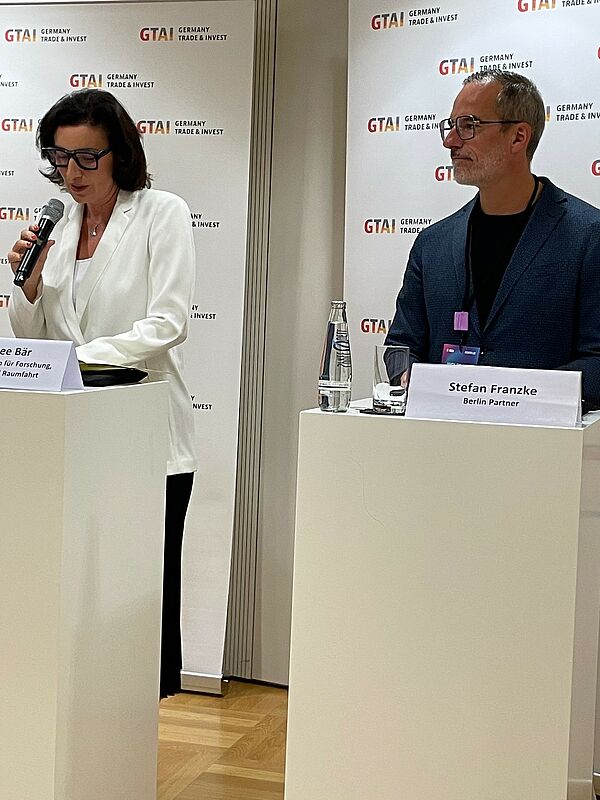
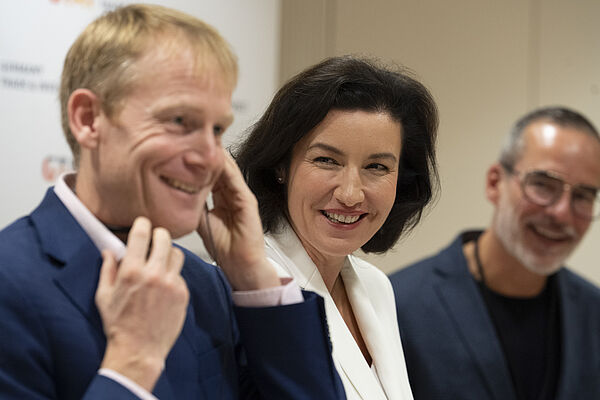
The press conference was also attended by two federal ministers, underscoring the political significance of Planet’s expansion.
Dorothee Bär, Federal Minister for Research, Technology and Space, emphasized: “Without satellite services – including Earth observation – modern life would be virtually unthinkable. In times of crisis, they are indispensable for the security and operational capability of the federal government. Planet’s decision to expand in Germany and establish satellite production in Berlin is a strong commitment to our country as a hub for space technology. It highlights the attractiveness and competitiveness of Germany in a sector that is strategically and economically vital for our future. We have a dynamic New Space ecosystem, and we must harness it for pioneering innovation and technological sovereignty. My ministry is creating the right framework to ensure that Germany and Europe play a leading role in the global race for space.”
Katherina Reiche, Federal Minister for Economic Affairs and Energy, added: “The sky is not the limit! Planet Labs’ investment in a new high-tech production site in Berlin is more than a location decision – it is a vote of confidence in Germany as a hub for high-tech and space innovation. The investment will create highly skilled jobs, generate broad economic momentum, strengthen European supply chains, and underline Germany’s role as a driver of innovation and industrial excellence.”
Support from business development agencies
In selecting its site and planning the project, Planet Labs received support from Germany Trade & Invest (GTAI), the federal economic development agency, as well as from Berlin Partner for Business and Technology, the economic development agency of the State of Berlin.