
Berlin is knorke: Robotics on construction sites
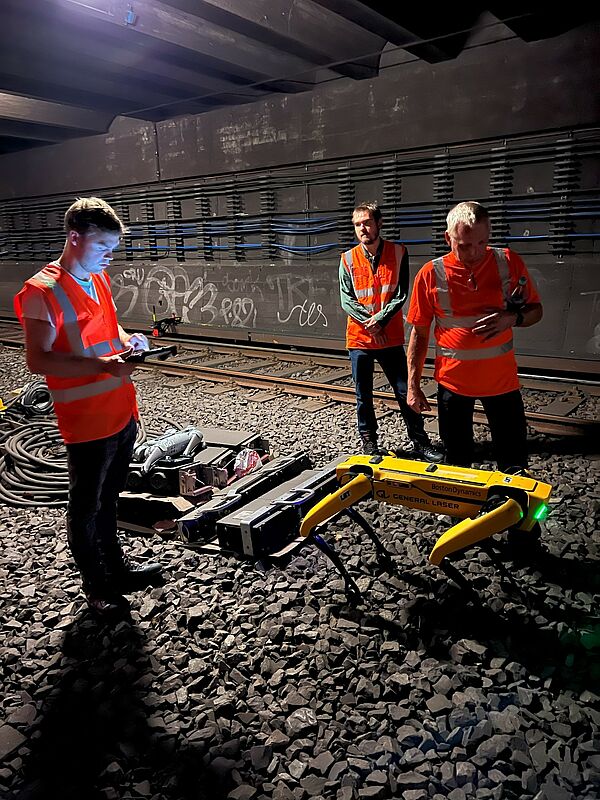
Berlin, 28.04.2025: High risk in civil engineering - studies have shown that cable and pipe damage costs over 500 million euros every year. This is according to the 2020/21 construction damage report from the Verband Sicherer Tiefbau e.V. The Berlin-based family business LAT Funkanlagen-Service GmbH (LAT) wants to counteract this shortcoming with the help of the robot dog “Spot”. Among other things, LAT is testing robots in the field of tracks and has set itself the goal of accelerating the expansion of railway infrastructure through robotics. An excellent project, as the jury of the Berlin-Brandenburg Innovation Award judged and selected the company as one of the 2024 award winners.
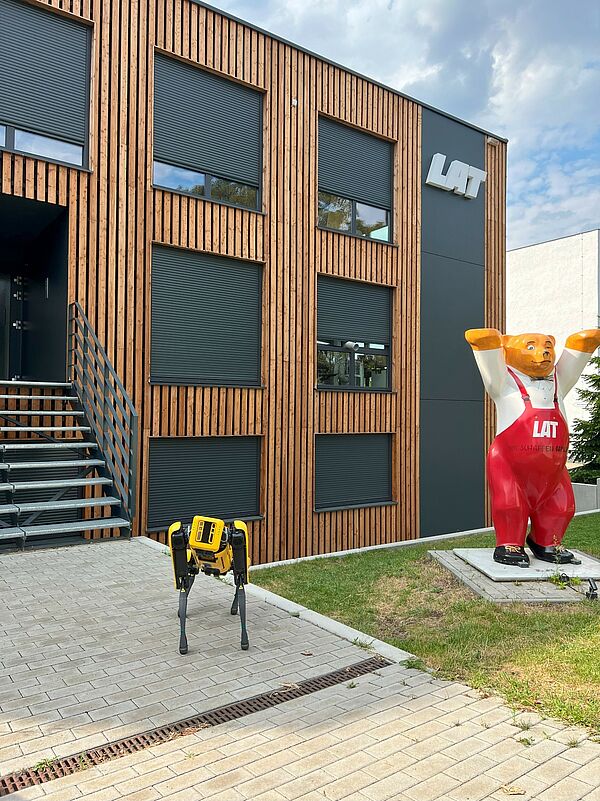
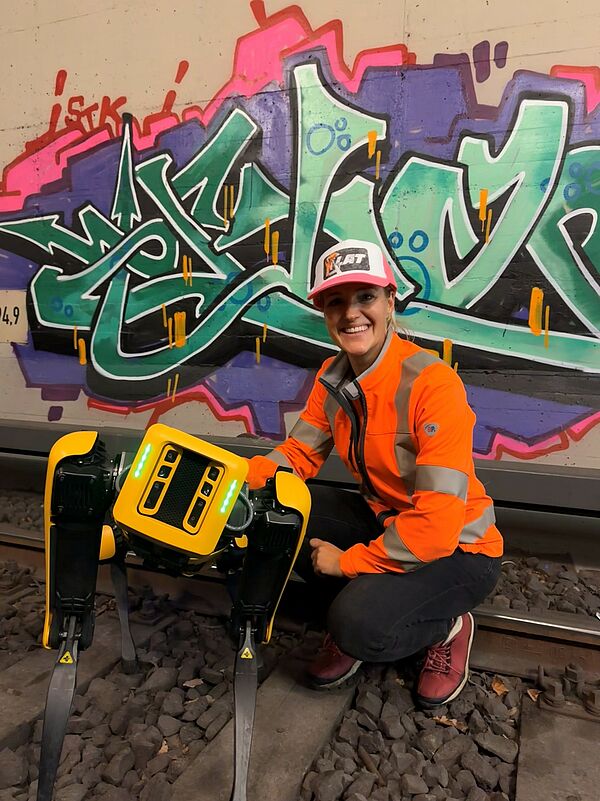
For Managing Director Larissa Zeichhardt, the company founded by her father is characterised above all by “real craftsmanship”. LAT Funkanlagen-Service GmbH, which belongs to the LAT Group, offers security, network and transmission technology for transport operators. The company’s own technicians therefore install hardware and software for passenger information systems, passenger counting and WLAN. LAT is located in Modersohnstrasse in Berlin-Friedrichshain. Together with Benjamin Panreck, lecturer and research assistant for digital systems and humanoid robotics at the Berlin University of Applied Sciences (BHT), the company has developed the robot dog “Spot” - and sent it out on the track. The potential of the four-legged robot was to be evaluated for the first time as part of the mFUND feasibility study “Digital line information by robots on construction sites - SchaufelPlus” funded by the Federal Ministry for Digital and Transport (BMDV), which LAT conducted together with BHT and Berliner Verkehrsbetriebe AöR (BVG) in 2022 / 2023. mFUND is the innovation initiative of the BMDV, which has been funding research and development projects dealing with digital data-based applications for the mobility of the future since 2016.
In the meantime, the project has become the focus of public attention. Probably also because “Spot” passed his aptitude test. For this purpose, the robot dog was equipped with innovative sensors and programmed to document the laying of cables in subway tunnels, among other things. To do this, it moves independently along the track bed and records image and humidity data, but can also record temperatures that provide information about the condition of buildings and structures. “Spot” does all this without stopping construction trains or other trades. Instead, it saves a considerable amount of time. The proportion of working time on the track that is used for documentation is a full 40%. Many companies still rely on paper to record construction progress. Thanks to “Spot”, however, the important and sensitive data are recorded digitally – and makes the job of LAT employees easier in that they can concentrate fully on their trade instead of doing time-consuming documentation work.
For LAT, their robot dog is therefore much more than just a project. With “Spot”, the company wants to accelerate the transport transition and help to plan infrastructure projects more realistically and relieve the burden on skilled workers. The jury of the Berlin-Brandenburg Innovation Award 2024 rated the company’s mission as an “excellent example of process innovation” and pointed to the longevity of public infrastructure and the associated need to integrate digitalisation gradually, flexibly and in a mobile way into infrastructure projects. Good prospects for “Spot”, which will probably be found more frequently on civil engineering construction sites in Berlin and Brandenburg in the future.
You can also hear more from Larissa Zeichhardt in our Berlin Business Podcast, on the topic of “The transport transition in Berlin”.